



Back to Blogs
Discover
Discover The Abbey Gardens Bury St Edmunds
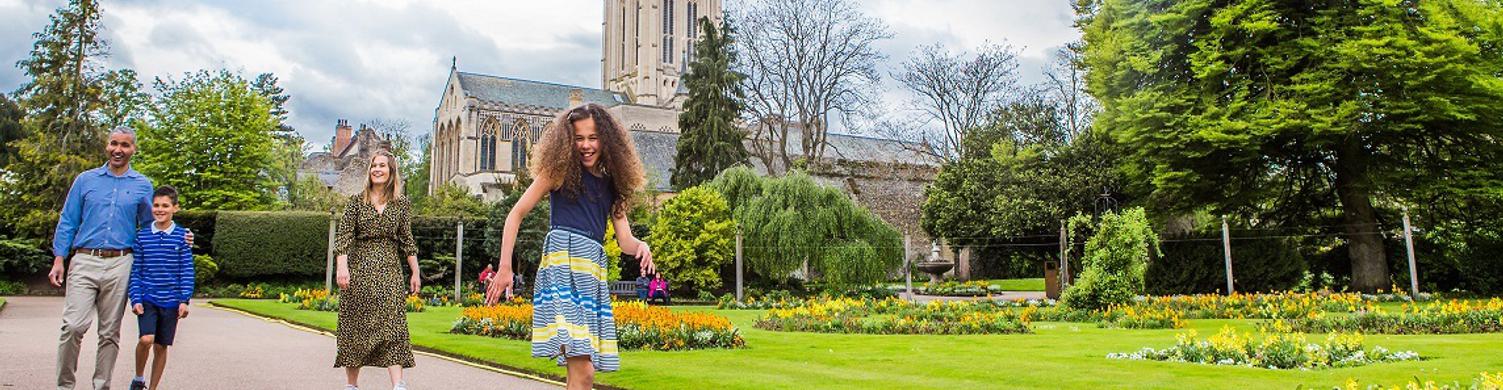
This stunning park in the heart of Bury St Edmunds is steeped in history and stories and is the perfect place to watch the world go by ...
Originally a Botanic Garden
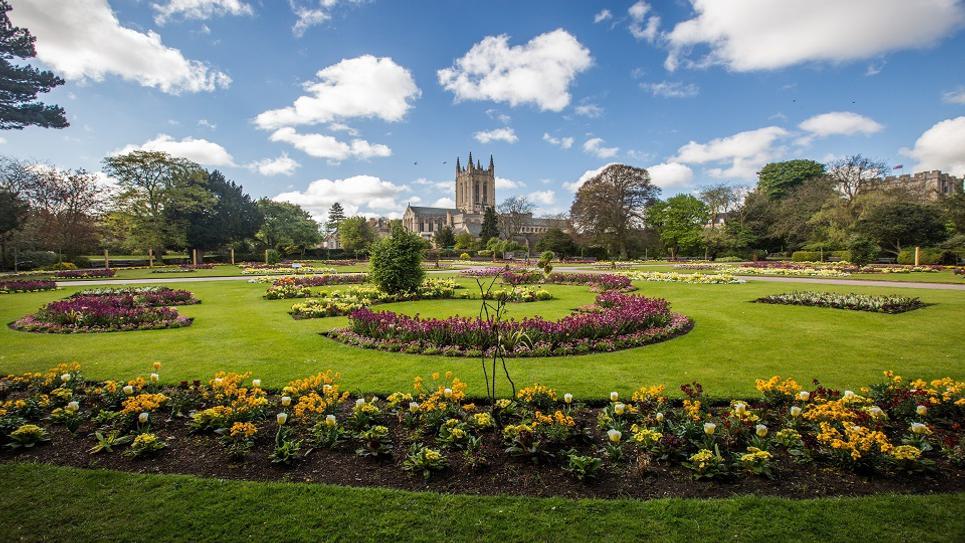
The Abbey Gardens, in the heart of Bury St Edmunds, is the perfect spot for enjoying peace and quiet whilst watching the world go by and it is free to explore.
Created in 1831 by Nathaniel Hodson, the Abbey Gardens was originally a botanic garden laid out in the same style as the Royal Botanic Gardens in Brussels.
In 1936 the concentric circles were replaced by the sixty-four island beds which, together with illuminations, formed part of the Coronation celebrations for George VI in 1937.
Today, approximately 20,000 plants are bedded out in the spring for the summer display plus 12,000 plants and 20,000 bulbs in the autumn for the spring display. You can purchase some of these plants at the Abbey Gardens Shop. It is the 4th most visit free attraction in England!
The Ruins of the Abbey of St Edmund
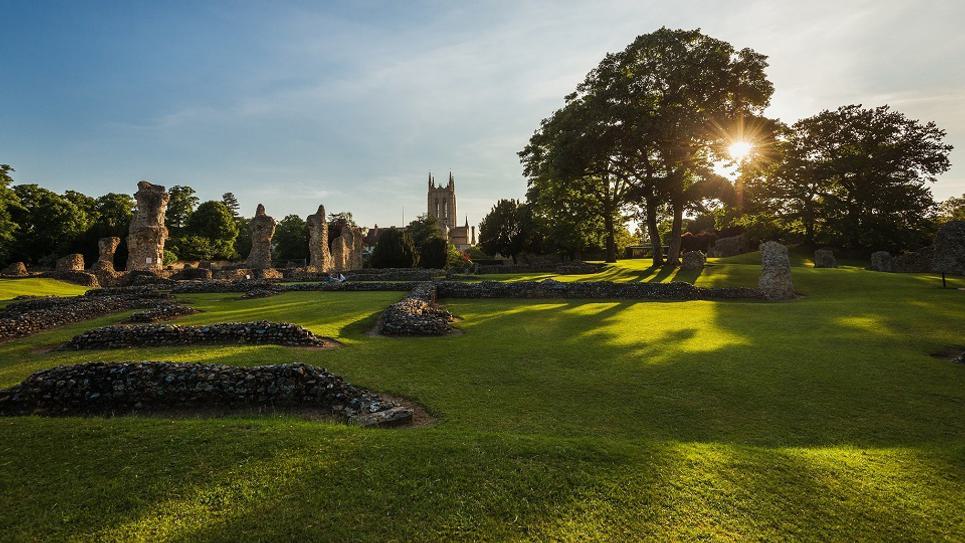
In 903 the remains of Saint Edmund, the original the Patron Saint of England, were moved to the Anglo-Saxon settlement of Beodericsworth (later known as Bury St Edmunds) where the site had already been in religious use for nearly three centuries.
St Edmund’s body was moved to London in 1010 for safe keeping when The Danes were again marauding through East Anglia but three years later his body was returned to Beodericsworth. In 1020, King Cnut had a stone church built for Edmund's body and the first abbots arrived. This was the beginning of the Abbey of St Edmund and it became a site of great pilgrimage as people from all over Europe came to visit St Edmund’s shrine.
It was Abbot Baldwin who embarked on a building programme to create the great Abbey Church that was to last well over 100 years. Work started on the Church in 1081 and it was consecrated in 1095. Its final total length was 505 feet (154 metres) and the majestic West Front 246 feet (75 metres).
The Abbey remains are extensive and include the complete 14th century Abbey Gate and Norman Tower, as well as the impressive ruins and altered west front of the immense church, St Mary's Church and parts of St Edmundsbury Cathedral.
Near the children's play area is a beautiful wildflower labyrinth, which is not only attractive to the local wildlife but provides a stunning foreground for photos of the Abbey Ruins and Cathedral! This is where the tennis courts used to sit and it is thought St Edmund may well be.
The Appleby Rose Garden
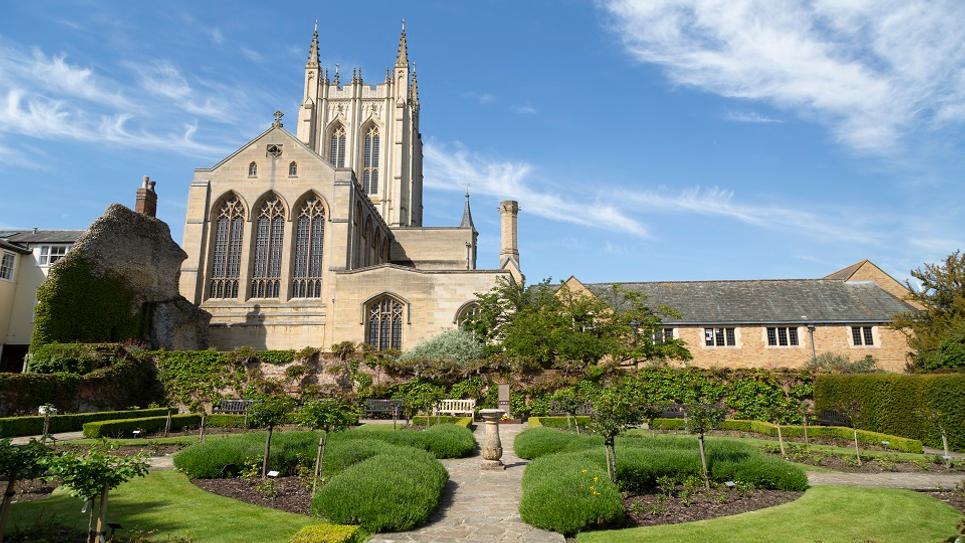
Originally an orchard, this is now a beautiful and established rose garden with over 400 rose bushes, including the Saint Edmund Rose, planted in 2005 in commemoration of the completion of St Edmundsbury Cathedral's new Millennium Tower and the visit by HRH, Charles, Prince of Wales and Camilla, Duchess of Cornwall.
The rose garden is named after John Appleby, an American serviceman who served with the 487th Bomb Group in Lavenham.
A Saint Edmund Rose was also planted in the Appleby Rose Garden of the Abbey Gardens and can still be seen today.
A bench made from the wing of an American 'Flying Fortress Bomber' and a memorial stone pays tribute to the many US servicemen and women stationed in Suffolk.
The Water Garden

Tranquil and calming, the water garden is a relaxing place to enjoy some shade on sunny summer days.
Sensory Garden
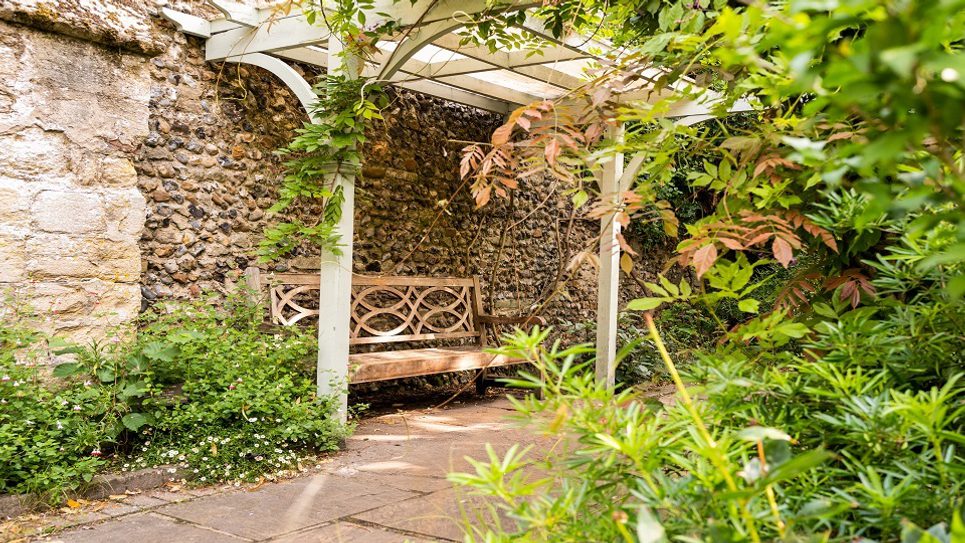
The Abbey Gardens first ‘Blind Garden’ was built in 1990 and was designed to provide interest for the visually impaired through scented plants and herbs.
The pergola is designed to give the effect of a cloister where the monks would have walked in days gone by.
Pilgrim's Herb Garden

The garden features many traditional medicinal plants believed to cure most ills and also ward off evil spirits. It was inspired by a now famous manuscript written at the Abbey in the 13th century which is housed in the Bodleian Library in Oxford.
The Garden of Reflection
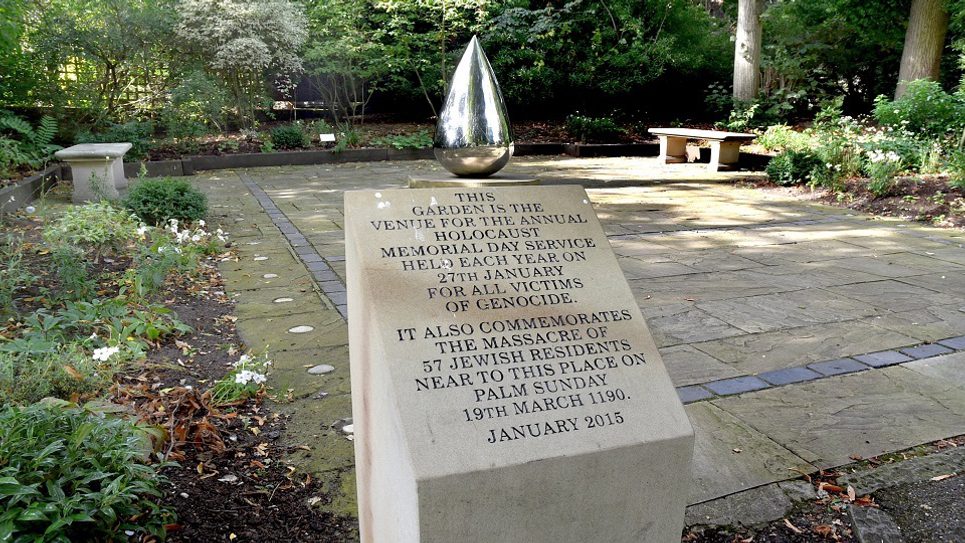
The garden commemorates the murder of 57 Jews in Bury St Edmunds on Palm Sunday, 19 March 1190 and all victims of genocide and is where the annual holocaust memorial services take place in Bury St Edmunds.
The centre piece of the Peace Garden is a 1.5 metre tall stainless steel teardrop, by Vanessa Hill of the Land & Sculpture Design Partnership, it also includes 57 cobble stones - one for each of the victims of the 1190 massacre.
The teardrop is a natural and universal symbol of pity and persecution, of human suffering and sorrow. It is made from polished stainless steel; its mirrored surface reflects back to us the role we all must play in opposing humanity’s inhumanity.
The Aviary

The Abbey Gardens has varieties of birds include canaries, budgies, teal ducks, Bengalis and Zebra finches and diamond doves.
In the late 60s/early 70s, the Abbey Gardens was home to two Rhesus macaque monkeys - they were presented by Wells Pet Shop in Short Brackland. The monkeys had until then lived in a cage by the shop doorway, but had become a nuisance to customers by reaching into pockets and bags.
In around 1950 a pair of peacocks lived in the Abbey Gardens in a large freestanding aviary. This also contained golden pheasants and various pigeon breeds, but mainly the Nun variety. The peacocks were later left to wander the gardens, calling across the town from the top of the Abbey Wall.
There is a designated Wildlife Feeding Area - near the dovecote, past the children's play area and over the bridge. Please only feed the local wildlife near the dovecote as this will encourage them to stay close to it.
Near to The Aviary is Grounds Cafe - Abbey Gardens serving a selection of drinks, snack and delicious ice cream!
The riverside

The beautiful River Lark runs along the eastern side of the Abbey Gardens and provides a picturesque walk whatever the season. The Abbey historically used the river as a power supply and trading route.
Look Out For ...
There are some wonderful pieces of artwork, hints of history and hidden gems within the Abbey Gardens. here's just a few of our favourites to look out for as you wander these historic gardens!
Abbey Gardens Sundial Fountain

This Victorian drinking fountain, with sundial cube on the top, was gifted to the people of Bury St Edmunds in 1871 by the 3rd Marquess of Bristol. The Abbey Gardens sundial is an extremely early example - quite possibly the earliest in the country - of a sundial that allowed the town clocks to be set to GMT rather than the local mean time.
Charter of Liberties Commemorative plaques
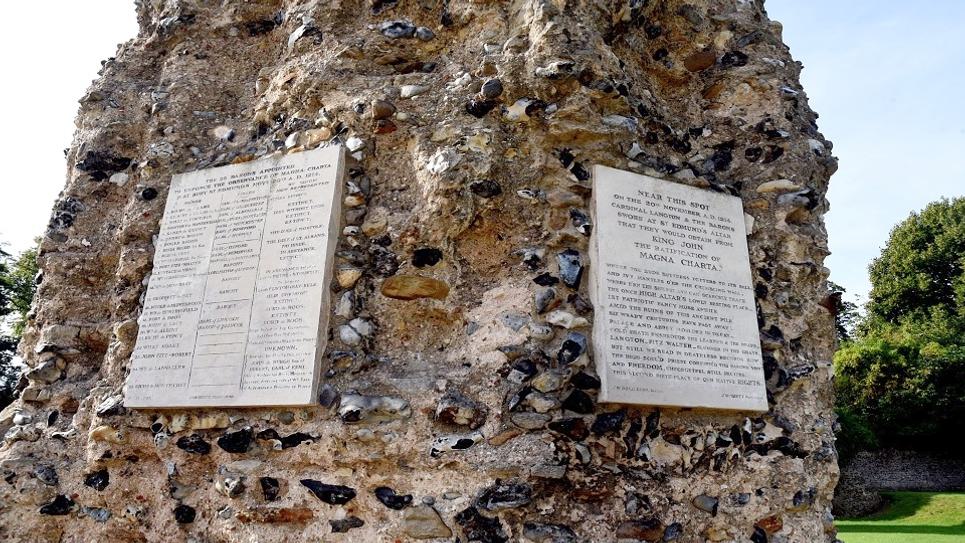
Two commemorative plaques erected in 1849 on the ruined piers of the crossing of the Abbey Church to mark the spot where on St Edmund's Day (November 20th) 1214, a group of barons swore an oath at St Edmund’s Altar to compel King John to accept the Charter of Liberties, a proclamation of Henry I.
This act led directly to the Great Charter or the Magna Carta, agreed at Runnymede on June 15 1215.
Our Liberty Memorial
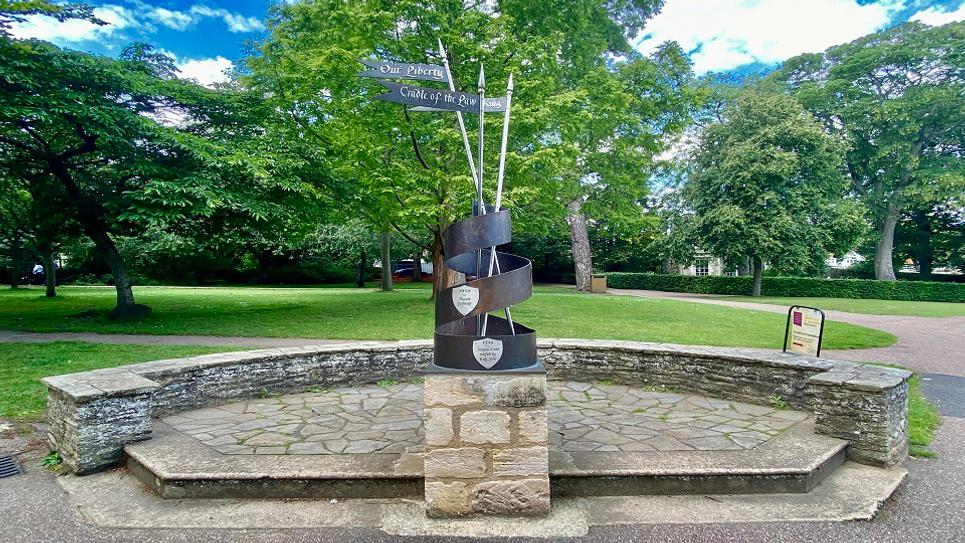
The ‘Our Liberty’ memorial, designed by Suffolk artist Nigel Kaines, in the Abbey Gardens includes the spears and banners of the barons who met in Bury St Edmunds in 1214, with bronze scrollwork displaying shields carrying the important commemorative events.
The design is supported on original stone from the Abbey – stones which might have been witness to the arrival of the barons all those years ago.
The Legend of St Edmund Book
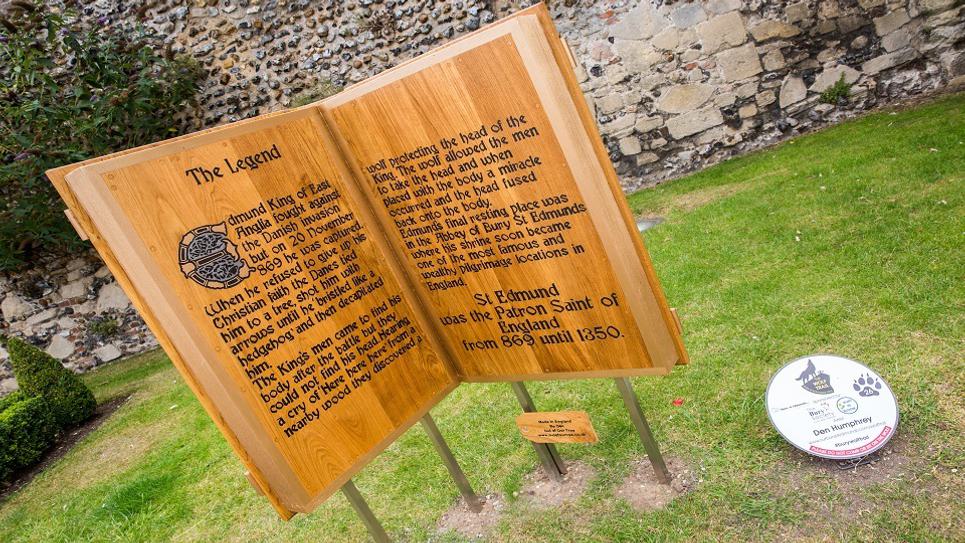
A wonderful oak book by Den Humphrey inscribed with the legend of St Edmund and the wolf can be found in the Abbey Gardens by the café.
The world's first Internet bench

Is right here in Bury St Edmunds on the right as you pass through the Abbey Gate. Installed in 2001 by Microsoft, the computer giant chose the town for the pilot scheme from hundreds of applications made by local authorities around the UK.
Download the Abbey Gardens Visitor Guide.
Related Blogs

News
£7.137m National Lottery…
Bury St Edmunds Abbey Project to Move Forward with…
News
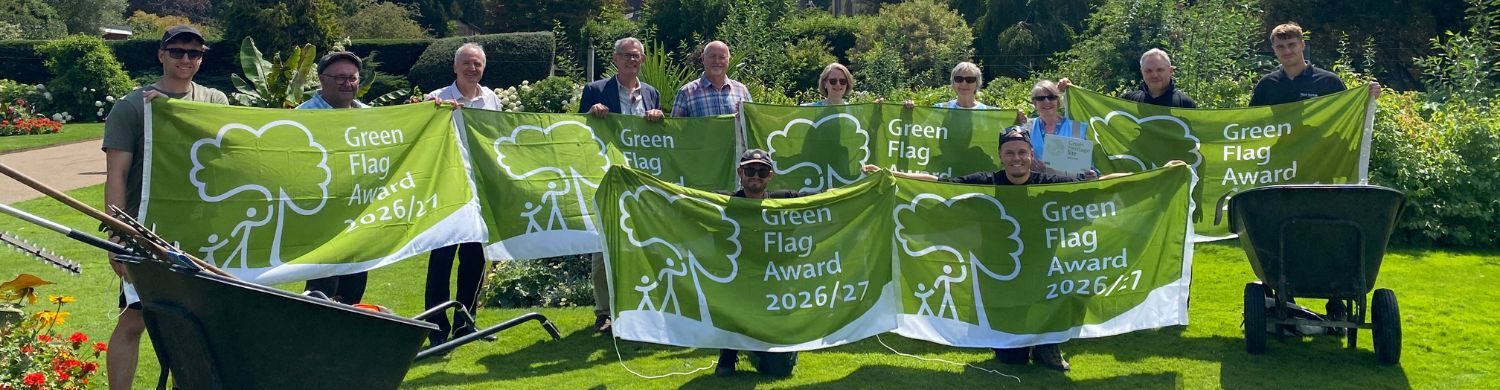
National Recognition for Bury…
The Abbey Gardens and Nowton Park in Bury St Edmunds,…
News
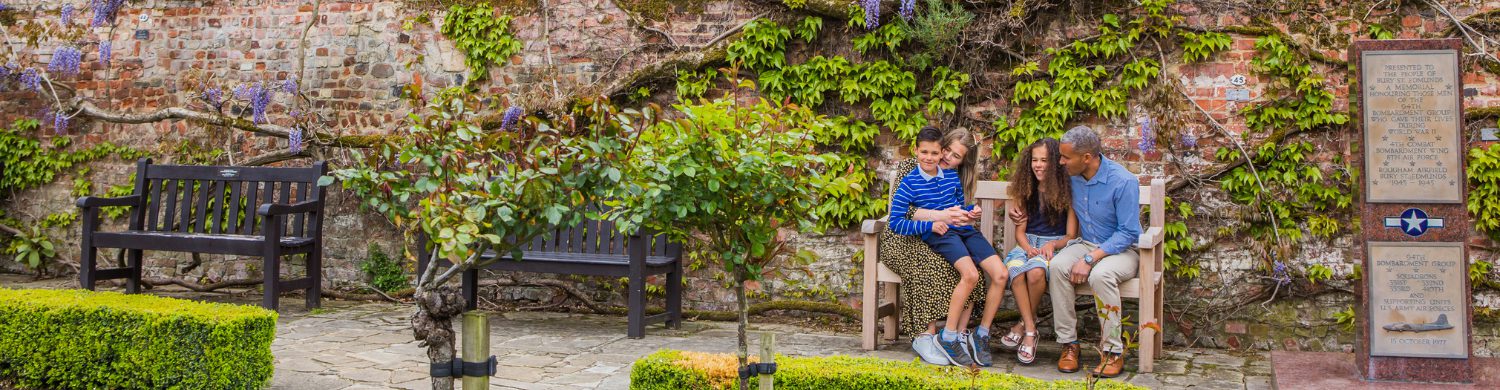
Discover Unmissable Events…
Whether you're heading here for a summer holiday or…

News
Discover The Story of Jankyn…
A cake and ale ceremony is held in Bury St Edmunds…
News
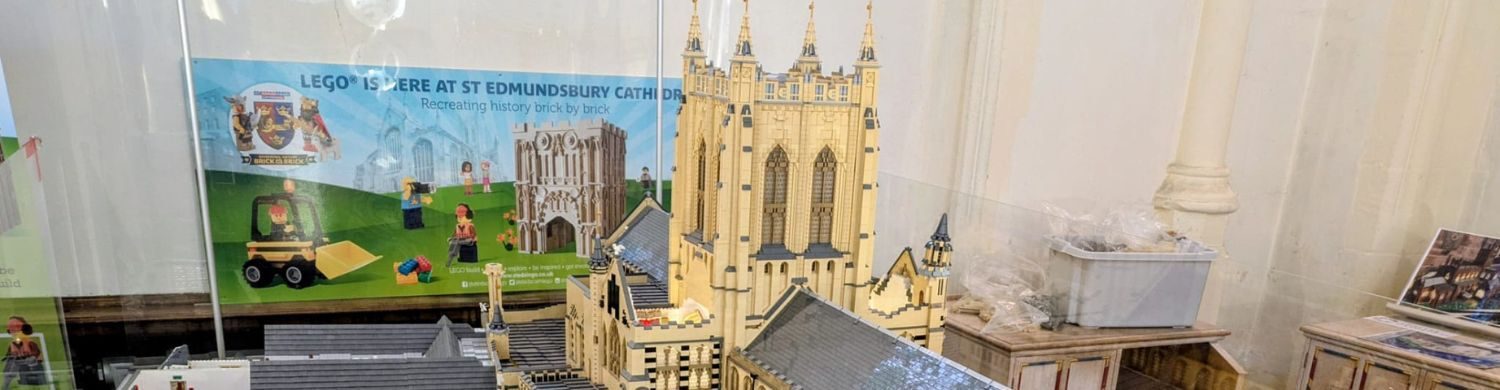
St Edmundsbury Cathedral…
St Edmundsbury Cathedral Completes LEGO® Model After…
Latest news

News
Bury St Edmunds Literature Festival 2026
Line-Up for Bury St Edmunds Literature Festival 2026 Announced

News
£7.137m National Lottery Grant Moves Abbey Project Ahead
Bury St Edmunds Abbey Project to Move Forward with £7.137m grant from The National Lottery Heritage Fund

News
National Recognition for Bury St Edmunds and Beyond's Award-winning Parks
The Abbey Gardens and Nowton Park in Bury St Edmunds, and West Stow Country Park just outside the town have today (14 July) been awarded Green Flag status for another year.

News
Explore the New Suffolk Wine Trail!
A new Wine Trail has been launched to help showcase Suffolk’s growing collection of local vineyards.

News
Free Family Days Out!
A family day out in Bury St Edmunds & Beyond needn't break the bank, check out our pick of things to do, which don't cost a penny!

News
5 Things to Spot at Nowton Park
There is almost 200 acres to explore at Nowton Park, so here's 5 things to spot on your next visit!

News
Days out that cost less than £10
Check out these fantastic days out in Bury St Edmunds & Beyond that won't break the bank!

News
Discover Unmissable Events for Families this Summer
Whether you're heading here for a summer holiday or simply looking for a fun day out, these unmissable family events are sure to keep everyone entertained!

News
Suffolk Day Events Bury St Edmunds 2026
Full Line-Up of Suffolk Day vents for Sunday 21 June!
